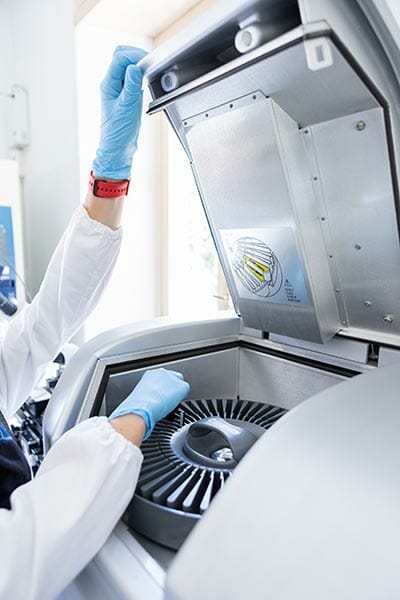
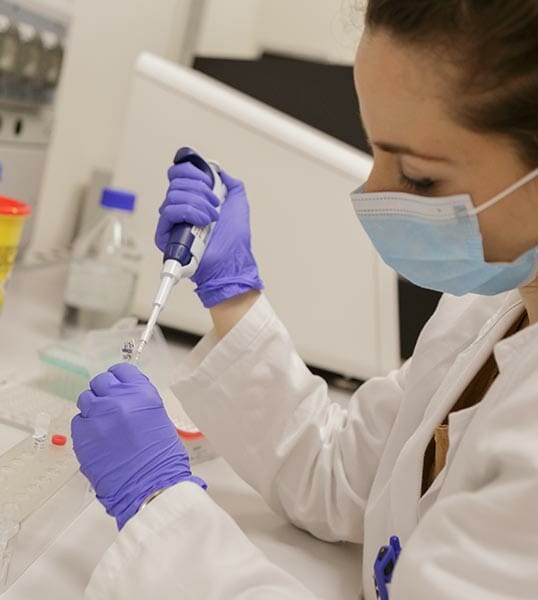
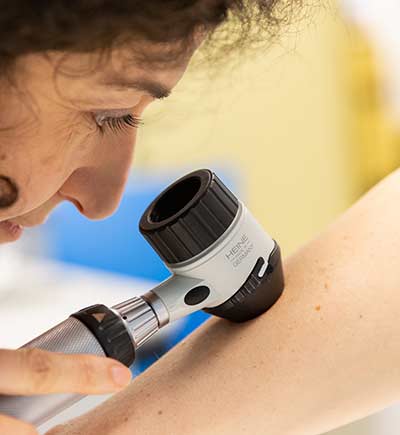
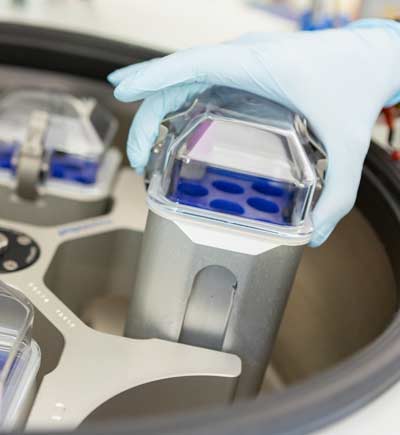
Born with the intent to perform molecular analyses in the oncology field, the molecular oncology laboratory (LOM) provides support to anatomical pathologists from a diagnostic standpoint, when cytological analysis gives doubtful results, and to clinicians, regarding prognosis and therapy selection. This is achieved by analyzing specific genome alterations present in different tumors, upon request from specialist physicians through affiliated hospital facilities.
History
The Edo and Elvo Tempia Foundation launched molecular diagnostic activity in January 2011 in collaboration with the Pathological Anatomy department of the Maggiore della Carità University Hospital of Novara, creating the molecular oncology laboratory. The purpose of this collaboration is to provide molecular characterization of tumors for all patients from the northeastern Piedmont quadrant (provinces of Biella, Vercelli, Novara, Verbania-Cusio-Ossola). Over the years, agreements have been established with other Piedmontese health companies based on different specific needs (such as ASL of Biella, Alessandria, Asti, Cuneo, Torino, Verbania-Cusio-Ossola, ASO of Cuneo, Parini Hospital in Aosta, Mauriziano Hospital in Torino).
Staff
The laboratory staff consists of highly specialized figures who, alongside routine diagnostics, carry out clinical and translational research projects. Personnel specialized in clinical pathology and clinical biochemistry ensure adequate quality of diagnostic services performed. The employment of research doctors in human oncology, molecular medicine, complex systems applied to post-genomic biology, bioengineering and biosciences guarantees constant staff updating in the various pathologies under study. Technical personnel have been trained through masters in molecular diagnostics.
Methods and Instrumentation
Next-Generation Sequencing (NGS) Sequencing by Synthesis (MiSeq, Illumina) and Ion Torrent (PGM, Thermo Fisher Scientific). Thanks to these methods, it is possible to analyze numerous genes simultaneously, starting from a very reduced amount of biological material (DNA, RNA) on tissue or liquid biopsy.
Automatic DNA Sequencer AB3500dx (Life Technologies). Direct sequencing allows identification of any type of alteration in DNA base composition (point mutations, deletions, insertions, etc.). The Sequencer is also used for high-resolution fragment analysis.
Real-time PCR Aria Dx qPCR instrument model (Diatech Pharmacogenetics) used in combination with commercial kits certified for CE-IVD in vitro diagnostics to identify mutations at the DNA level in the main genes with predictive value for therapy response and pharmacogenetics.
Reverse dot-blot Tendigo (Fujirebio), used for molecular genotyping of HPV virus through CE-IVD commercial kit with reverse dot-blot methodology.
Services
The tumor pathologies under study are numerous and in some cases involve a panel or flow-chart approach. In particular, for melanoma, colorectal carcinoma and gastrointestinal stromal tumors (GIST), multiple molecular markers are analyzed in sequence to use the best cost-effectiveness approach in selecting biological therapy for each patient, based on their molecular profile. These analyses can serve to identify patients responsive to drugs already on the market, or be aimed at identifying patients eligible for clinical trials with experimental drugs. For thyroid lesions, instead, the use of a panel approach may help diagnostic in cases of cytologically indeterminate lesions; the result of such analyses can therefore affect patient management and possible surgical choice, as well as follow-up.
Service List
Next Generation Sequencing (NGS)
>> BRCA1, BRCA2 for predictivity of response to PARP inhibitors. Detailed list of target regions.
>> HRD analysis for genomic instability for predictivity of response to PARP inhibitors in patients with high-grade ovarian cancer (including genes: AKT1, ATM, BARD1, BRCA1, BRCA2, BRIP1, CCNE1, CDK12, CHEK1, CHEK2, ESR1, FANCA, FANCD2, FANCL, FGFR1, FGFR2, FGFR3, MRE11, NBN, PALB2, PIK3CA, PPP2R2A, PTEN, RAD51B, RAD51C, RAD51D, RAD54L, TP53)
>> Myriapod Cancer panel DNA for detection of mutations in the 17 main target oncogenes: ALK, BRAF, EGFR, ERBB2, FGFR3, HRAS, IDH1, IDH2, KIT, KRAS, MET, NRAS, PDGFRA, PIK3CA, POLE, RET and ROS1 (various solid tumors). Detailed list of target regions.
>> Myriapod Cancer panel RNA for detection of gene fusions of ALK, ROS1, RET, NTRK1, NTRK2, NTRK3, FGFR2, FGFR3, PPARG and MET exon 14 skipping in total RNA (NSCLC and other tumors). Detailed list of target regions.
>> Implementation of possible ad-hoc target panels for particular pathologies
High-Resolution Fragment Analysis
>> Microsatellite instability (MSI) in case of suspected Lynch syndrome or as a predictive marker of response to immunotherapy in various solid tumors
>> MLPA analysis of copy number variations of BRCA1 and BRCA2 genes
Real-time PCR and Sanger Sequencing
Direct DNA sequencing and Real-Time PCR are used to identify mutations in the following genes:
>> BRAF (exon 15) in patients with melanoma, thyroid carcinoma, lung carcinoma and colorectal carcinoma
>> KRAS (exons 2, 3 and 4) in patients with colorectal carcinoma, lung carcinoma
>> NRAS (exons 2, 3 and 4) in patients with colorectal carcinoma, melanoma
>> HRAS (exons 2 and 3) in doubtful thyroid and melanocytic lesions (Spitz nevi, spitzoid melanoma)
>> c-KIT (exons 9, 11, 13, 17 and 18) in patients with GIST, melanomas
>> EGFR (exons 18, 19, 20 and 21) in patients with lung carcinoma
>> pTERT in melanomas and thyroid lesions
>> PDGFRα (exons 12, 18) in patients with GIST
>> PIK3CA (exons 4, 7, 9 and 20) in solid tumors
>> RET (exons 10, 11, 14, 15 and 16) in patients with lesions suspected for medullary thyroid carcinoma
>> NTRK (NTRK1, NTRK2 and NTRK3 rearrangements) in solid tumors
>> DPYD in patients in pre-therapy with fluoropyrimidines
>> Fusions of ALK, ROS1, RET and MET in patients with lung carcinoma (Detailed list of identifiable fusions)
Reverse Dot-Blot
HPV molecular genotyping (32 genotypes), performed using Reverse Dot Blot methodology. This type of investigation finds application in gynecological, dermatological and otolaryngological fields to identify with certainty the etiology of some lesions with malignant evolution.
Required Material for Analysis
Molecular analyses are performed starting from fixed tissue, whole blood or liquid biopsy. The shipping methods and type of material to be sent to the laboratory depend on agreements made during contract stipulation with the user (agreements with public entities, direct assignments, tender competitions and similar).
For more information in this regard, please refer to the operational instruction “User Information” (IO 01 PRO 24, provided upon request).
Reporting Times
The results of molecular analyses are sent in report form, electronically signed, via certified email (PEC). The report is stored on Infocert according to current regulations. Test results (excluding those conducted with NGS) are reported within 5 working days from acceptance. Results of analyses conducted with NGS methodology are reported within 3 weeks from acceptance (average 2 weeks). Instrumental recordings related to performed examinations will be stored for the following 5 years, unless otherwise agreed with users.
Quality Standards
Quality Policy
UNI EN ISO 15189:2013 Accreditation LOM is accredited with Accredia as a medical laboratory (M 0017) for examinations in the medical genetics discipline. Details of accredited examinations are available at the top of the page.
LOM has stipulated an agreement with Accredia defining mutual obligations. Maintaining accreditation involves periodic verification by Accredia of the laboratory’s technical and managerial competence in compliance with requirements set by the UNI EN ISO 15189:2013 standard “Medical laboratories – Requirements for quality and competence” and additional Accredia requirements.
Quality Controls
To guarantee the quality of work performed primarily for patients and clinicians, the molecular oncology laboratory periodically adheres to European quality controls organized by the reference entity EMQN (European Molecular Genetics Quality Network).
The molecular oncology laboratory possesses quality certificates necessary for performing mutational analyses required by D.P.C.M. of January 12, 2017 in the molecular genetics sector.
National Quality Control AIOM-Siapec for evaluation of mutations:
>> Kras in Colorectal Carcinoma (2012)
>> Braf in Melanoma (2012)
>> Colorectal Carcinoma (2014)
>> Egfr in Lung Carcinoma (2015)
>> Colon-Rectum (2016)
>> Melanoma (2016)
European Quality Controls EMQN:
>> Colorectal Cancer Sporadic – 2017
>> Lung Cancer (NSCLC) – 2018
>> Ovarian Cancer Somatic NGS – Pilot – 2018
>> Melanoma – 2019
>> HBOC (BRCA1/BRCA2 Testing Only) – 2020
>> Ovarian (Somatic) – 2020
>> MSI – 2020
How to Reach Us
By car from Turin (72 km): A4 highway, Santhià exit; turn left on SS143 towards Biella, until the city entrance (roundabout after Ipercoop); continue left towards Biella Infermi Hospital.
By car from Milan (75 km) or Novara (57 km): A4 highway, Carisio exit; turn right, after 1 km at the junction (Carisio Crossroads) turn left on SS230 towards Biella; at Biella entrance (roundabout with modern art installation in the center); continue left towards New Biella Infermi Hospital.
By car from Genoa (180 km), Alessandria (100), Asti (90), from Emilia-Romagna and central-southern regions (other centers south of Vercelli): Reach Vercelli (for those arriving from A26 take Vercelli Ovest exit); travel the entire Vercelli ring road northward where SS230 Vercelli-Biella begins (route from Vercelli). From Vercelli (43 km): SS230 Vercelli-Biella; at Biella entrance (roundabout with modern art installation in the center); continue left towards New Biella Infermi Hospital.
By train Biella is reachable by railway from Santhià or Novara. Biella San Paolo station is about 2 km from Ponderano and is connected with Santhià (regional connections with Turin and Vercelli) and with Novara (connections with Milan).
Departure times for trains from Santhià and Novara are available on the Trenitalia website.
In front of Biella San Paolo station you can find a taxi or bus that connects with urban loop to the New Biella Infermi Hospital.
Contacts
Dr. Maria Scatolini – Laboratory Director
Tel: +39 015 1515 3143 | Email: maria.scatolini@fondazionetempia.org
Molecular Oncology Laboratory, Ospedale degli Infermi di Biella
Via dei Ponderanesi, 2 – 13875 Ponderano (BI), Italy
Email: oncomolab@fondazionetempia.org | Fax: +39 015 1515 3146